
Makeup Mixology: A Systematic Framework for Understanding and Designing Makeup
Makeup is often taught as a collection of techniques: how to blend eyeshadow, contour a face, create a clean base, choose a lipstick, or execute a particular look.
But technique alone does not create strong makeup.
Across professional makeup education, colour theory, beauty design, photography, and visual art, the same principles appear repeatedly: colour, value, form, texture, proportion, placement, light, and balance.
Once these principles are understood as a system, makeup becomes much easier to learn.
Instead of memorising hundreds of looks, you learn how to construct them.
This is what I call Makeup Mixology:
FACE × COLOUR × VALUE × TEXTURE × PLACEMENT × LIGHT × INTENTION
Every makeup look is simply a different mixture of these elements.
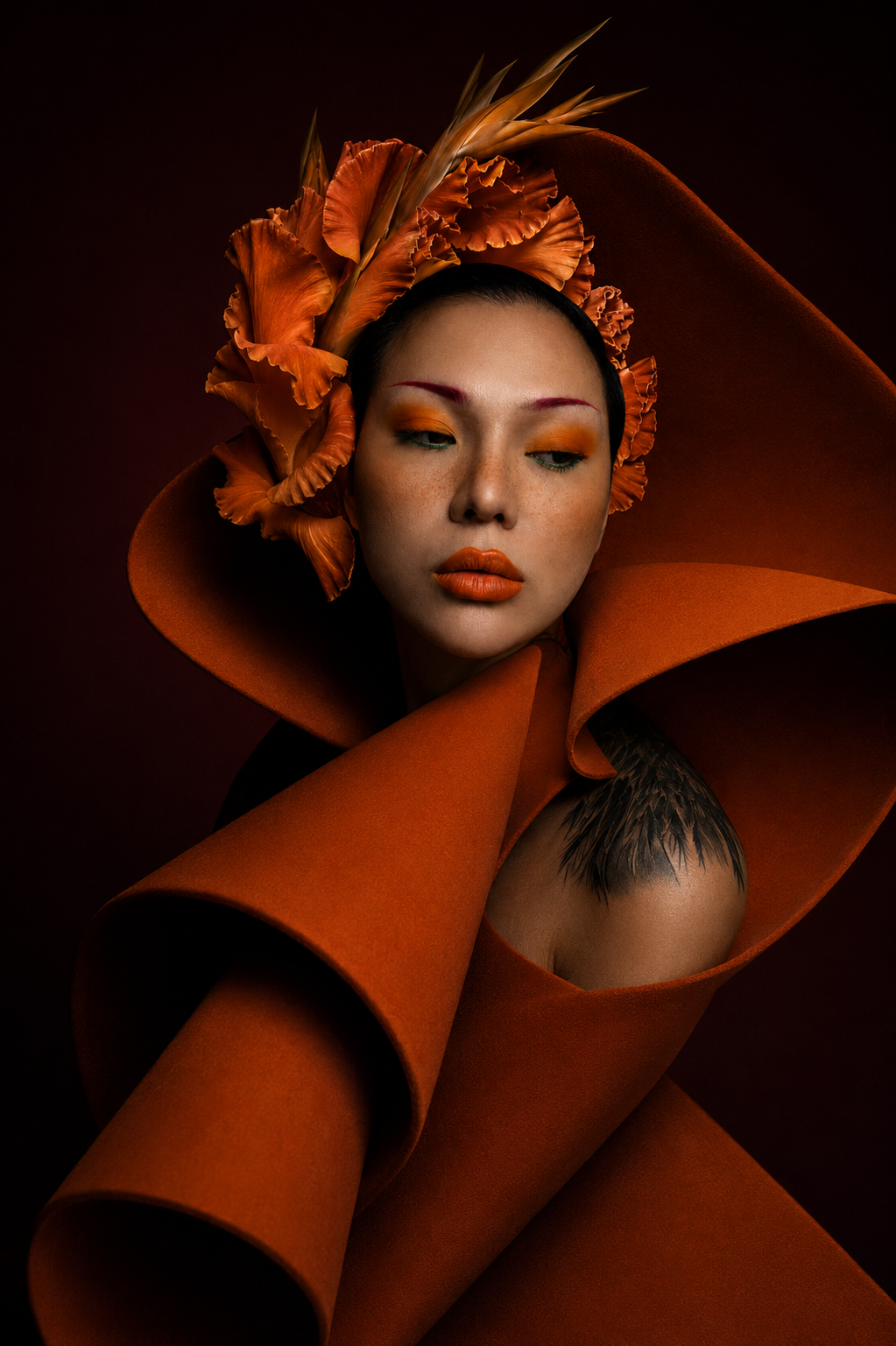
START WITH THE FACE, NOT THE PRODUCT
Before choosing colour, study the face.
A professional makeup artist does not begin with:
What eyeshadow should I use?
The better question is:
What already exists on this face, and what do I want to change, preserve, or emphasise?
Read the face through five variables:
Structure — bone structure, planes, projection and depth.
Proportion — the relationship between forehead, eyes, nose, cheeks, lips and jaw.
Direction — whether features visually move upward, downward, inward or outward.
Contrast — the natural difference between skin, eyes, brows, lips and hair.
Surface — skin texture, pores, dryness, oil, fine lines and reflectivity.
This gives us the first principle:
Do not correct a face before you understand it.
The goal is not automatically to make every face conform to the same ideal proportion. Sometimes we balance. Sometimes we exaggerate. Sometimes we deliberately preserve an unusual feature because it gives the face character.

COLOUR: THINK IN RELATIONSHIPS
Colour becomes much easier when you stop memorising individual shades and start thinking in three dimensions:
HUE
What colour family is it?
Red, orange, yellow, green, blue, violet and everything between them.
VALUE
How light or dark is it?
A pale blue and midnight blue may share a hue family, but visually they behave very differently because their values are different.
SATURATION
How intense or muted is the colour?
A vivid cobalt blue has high saturation.
A smoky grey-blue has lower saturation.
This creates a simple formula:
COLOUR = HUE + VALUE + SATURATION
Whenever a colour feels wrong, diagnose which variable is wrong.
Maybe the hue is correct but too saturated.
Maybe the saturation is beautiful but the value is too dark.
Maybe the colour itself works, but its relationship with the surrounding colours does not.
Professional colour selection is therefore less about asking:
“Is this a beautiful colour?”
and more about asking:
“What happens to this colour when I place it next to everything else?”
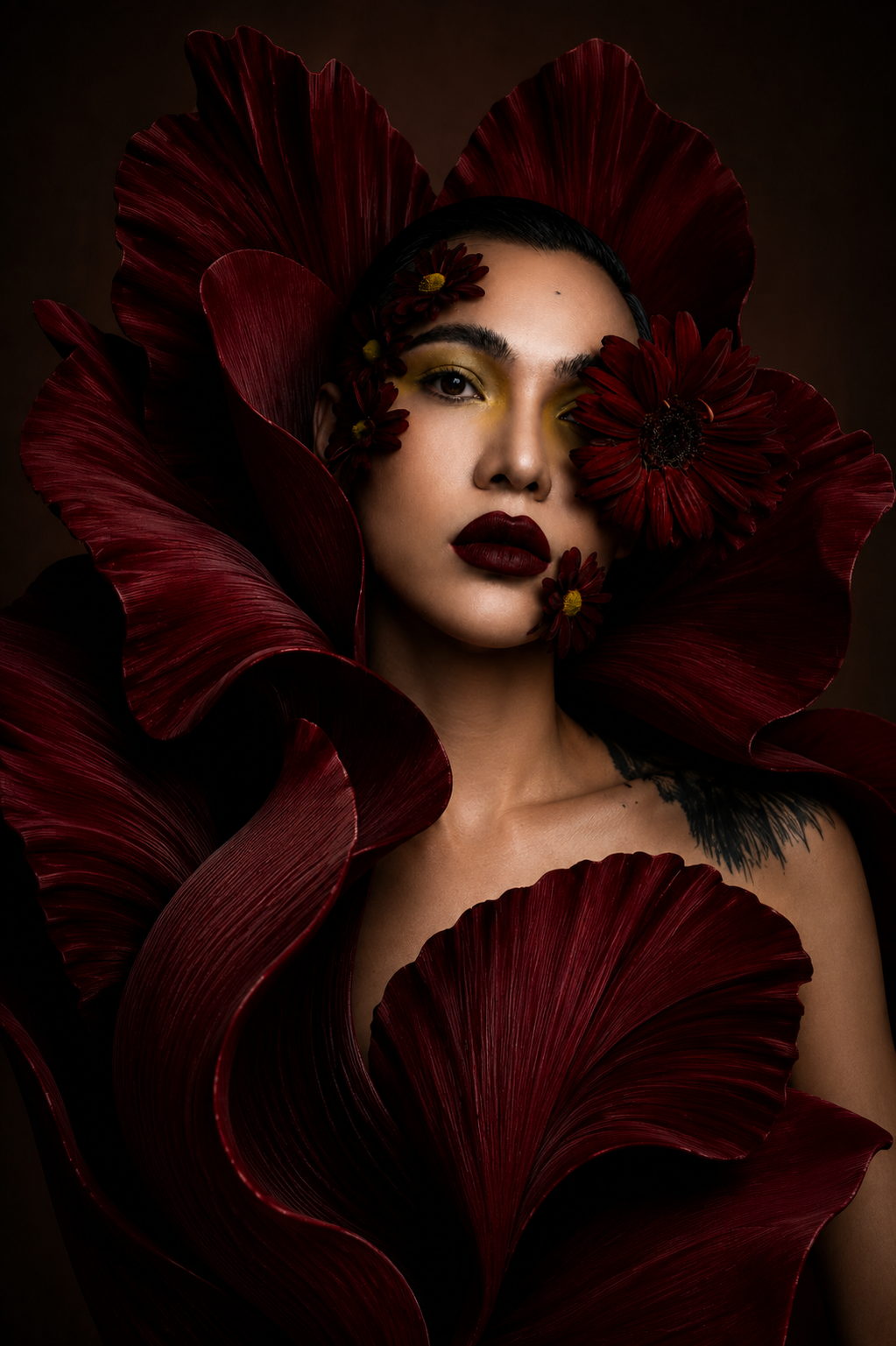
TEMPERATURE CREATES RELATIONSHIPS
Warm and cool colours do more than determine whether someone has a “warm” or “cool” undertone.
Temperature creates visual relationships.
Warm colours tend to feel more advancing.
Cool colours can feel more receding.
But temperature is relative.
A red can be warm beside violet and cool beside orange.
A taupe can appear neutral until it is placed beside a strongly warm brown.
Therefore:
Temperature should be judged comparatively, not absolutely.
This becomes extremely useful in editorial makeup.
A cool taupe contour beneath a silver highlight creates a very different emotional world from a warm bronze contour beneath a gold highlight—even if the placement is identical.
The technique has not changed.
The visual language has.
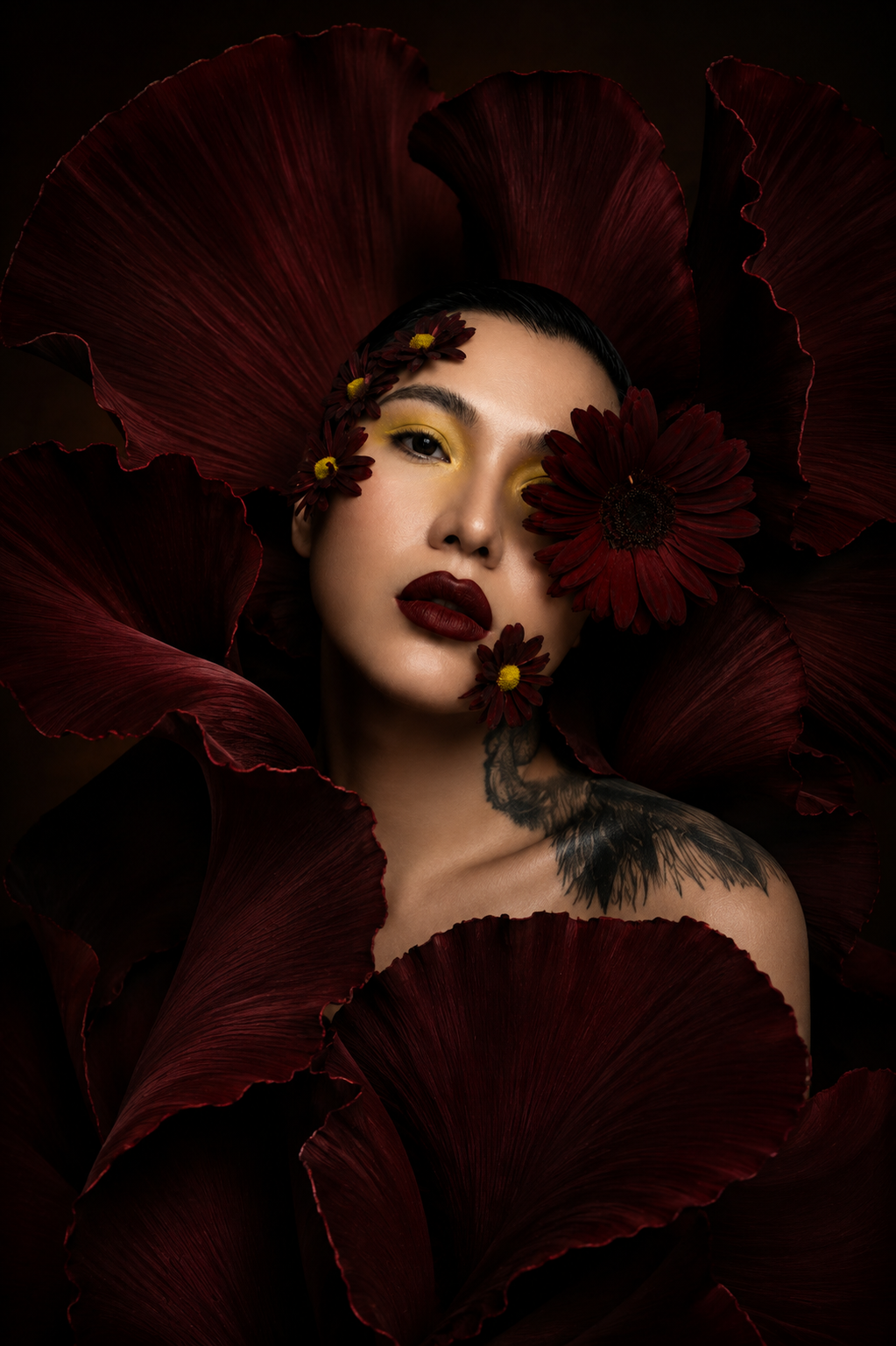
VALUE IS THE SECRET STRUCTURE OF MAKEUP
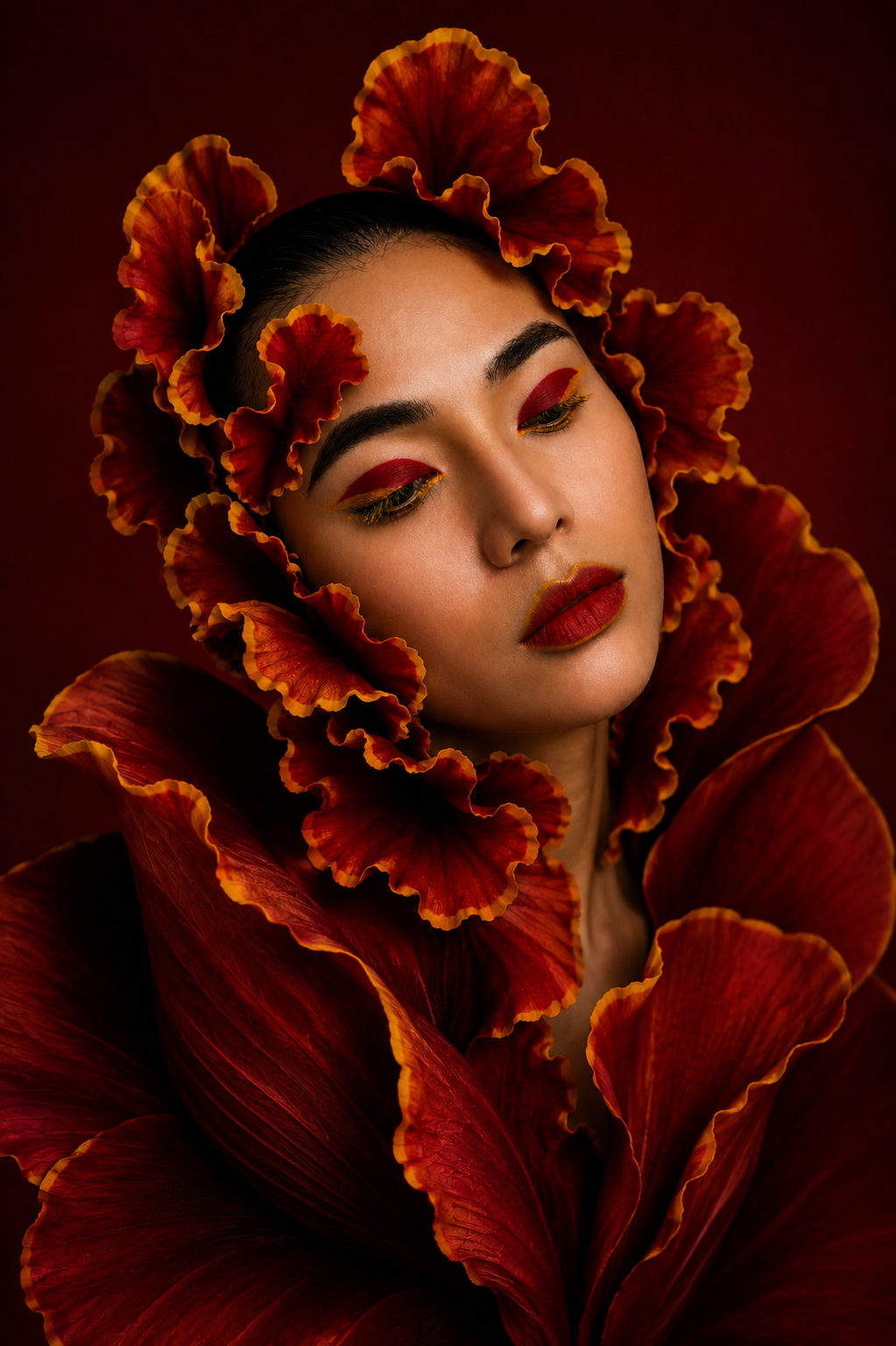
If colour creates atmosphere, value creates structure.
Imagine converting the finished makeup into black and white.
Would the design still work?
If yes, the value structure is probably strong.
Light values attract attention and visually bring areas forward.
Dark values create depth and can visually push areas backward.
Mid-values connect the two.
This gives us one of the most useful formulas in makeup:
LIGHT = FORWARD
DARK = DEPTH
MIDTONE = TRANSITION
Contour, highlighting, smoky eyes, lip dimension and even complexion work are all variations of value manipulation.
This is why adding more colour does not necessarily create more dimension.
Sometimes the missing ingredient is simply value separation.
FORM: MAKEUP IS THREE-DIMENSIONAL
The face is not a flat canvas.
It consists of planes.
The forehead curves.
The brow projects.
The eye socket recedes.
The cheekbone projects.
The hollow underneath it recedes.
The lips contain multiple curved surfaces.
The jaw turns away from the light.
Makeup interacts with all of these planes.
Therefore, contour should not simply be understood as “put dark colour under the cheekbone.”
Contour is:
the deliberate manipulation of perceived form through value, colour and placement.
Highlight performs the opposite function.
But highlight does not necessarily mean shimmer.
A lighter matte foundation can highlight.
A reflective pigment can highlight.
Moist skin can highlight.
Metallic pigment can create an extremely concentrated highlight.
They all manipulate light differently.
TEXTURE IS A VISUAL LANGUAGE
Texture is often treated as a finishing choice.
Matte or glossy?
Powder or cream?
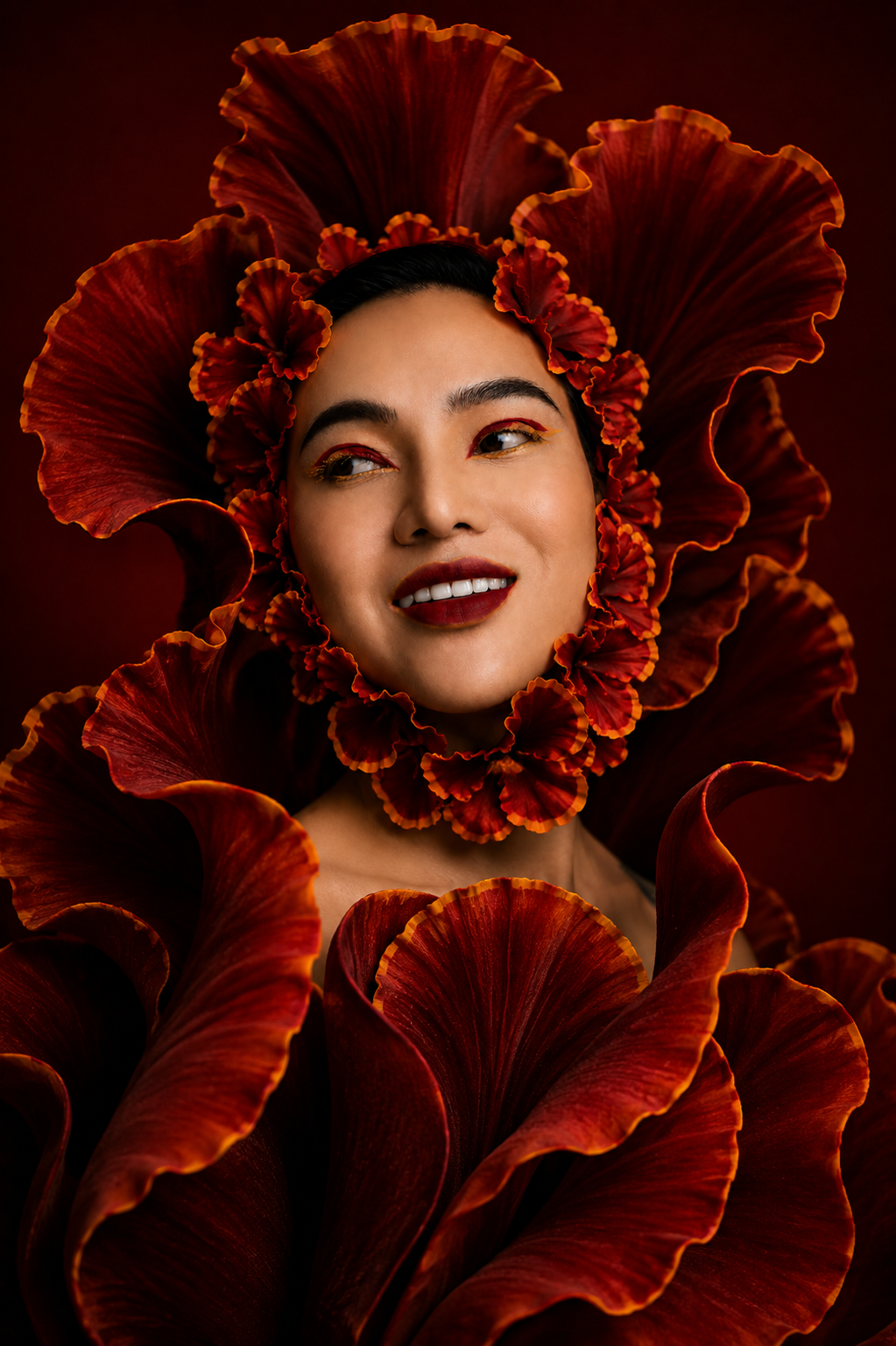
But texture can completely change the meaning of a look.
Consider:
Matte → controlled, graphic, quiet, dense.
Satin → refined, skin-like, subtle.
Gloss → wet, sensual, unstable, alive.
Metallic → reflective, artificial, futuristic, luxurious.
Glitter → fragmented light, movement, spectacle.
Raw skin texture → human, intimate, documentary.
The important concept is texture contrast.
A completely matte face can become visually flat.
A completely glossy face can lose hierarchy.
But matte skin beside a sharp metallic highlight creates separation.
A dry smoky eye beside a wet lid creates tension.
Therefore:
Texture becomes powerful when it has something different to react against.
PLACEMENT CONTROLS DIRECTION
Where makeup is placed can matter more than what colour is used.
Eyeshadow pulled horizontally outward creates width.
Shadow lifted toward the temple creates elevation.
Darkness concentrated around the lash line creates density.
Colour extending beyond the conventional eye shape creates exaggeration.
Blush concentrated centrally creates a different facial architecture from blush travelling toward the temple.
This can be reduced to:
PLACEMENT → DIRECTION → PERCEPTION
Before applying a product, imagine the direction of the stroke.
Ask:
Where does the eye travel when it sees this line?
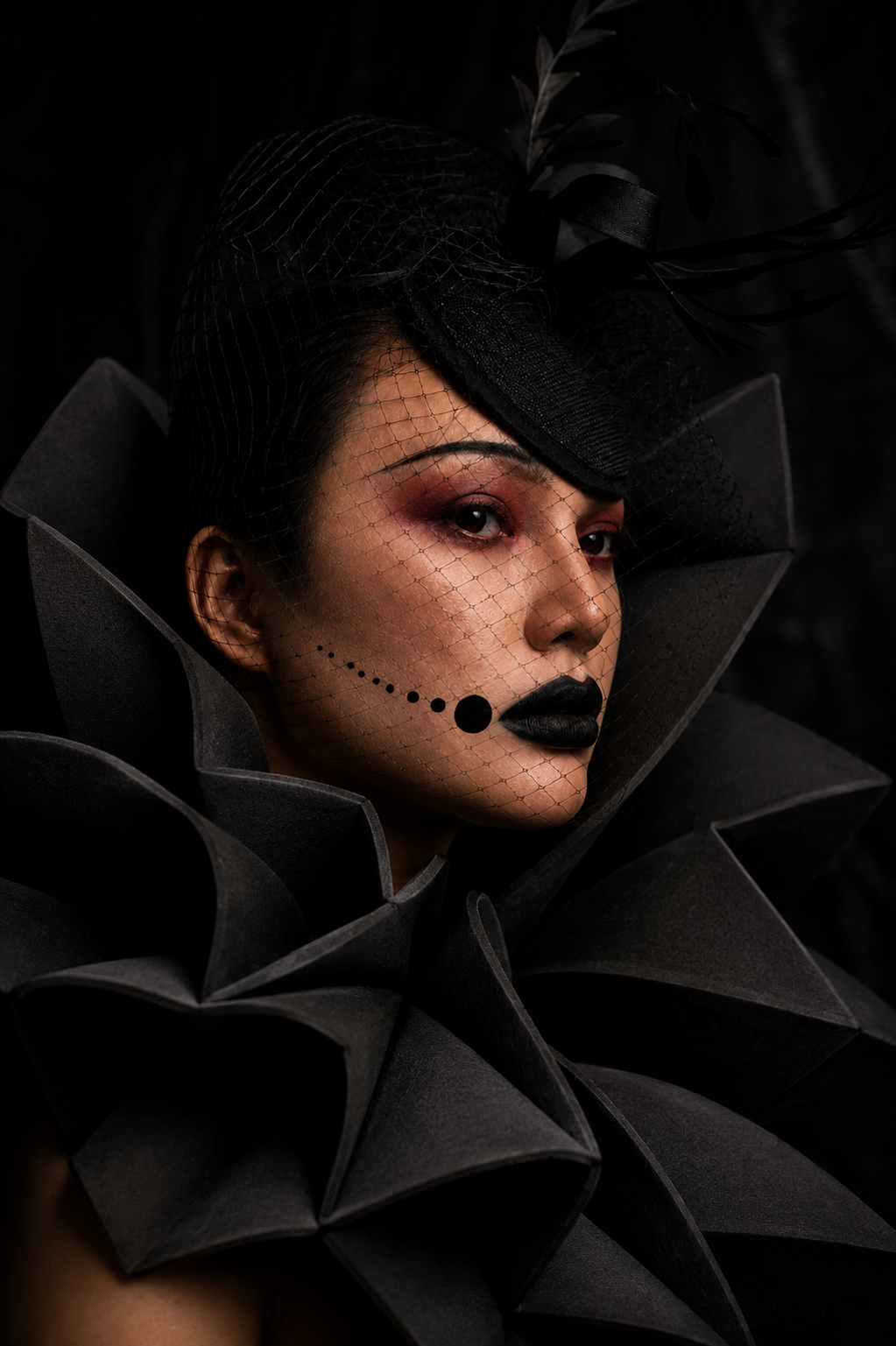
This is especially important in editorial makeup, where makeup can become part of the composition rather than simply decoration.
EDGES CONTROL HOW MAKEUP SPEAKS
Every shape has an edge.
And every edge communicates differently.
HARD EDGE
Graphic. Controlled. Artificial. Precise.
SOFT EDGE
Atmospheric. Natural. Diffused. Romantic.
LOST EDGE
The makeup gradually disappears into skin or another colour.
MIXED EDGE
Some parts remain sharp while others dissolve.
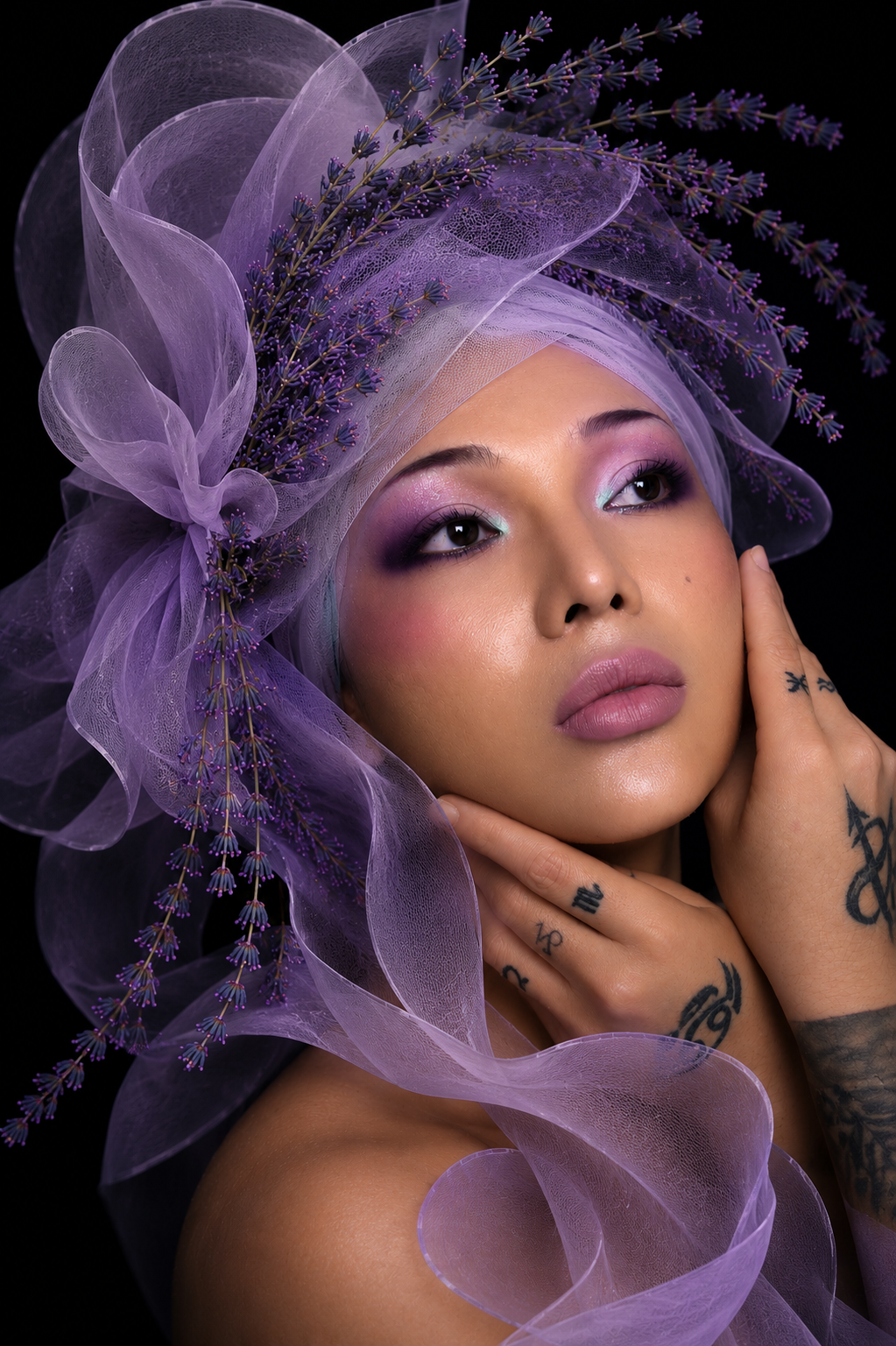
This is one of the easiest ways to make makeup more sophisticated.
Instead of blending everything equally, deliberately decide:
Where should the viewer clearly see the shape?
and:
Where should the shape disappear?
A smoky eye does not mean that every edge must be equally soft.
A strong editorial shape does not mean every edge must be sharp.
Edge variation creates hierarchy.
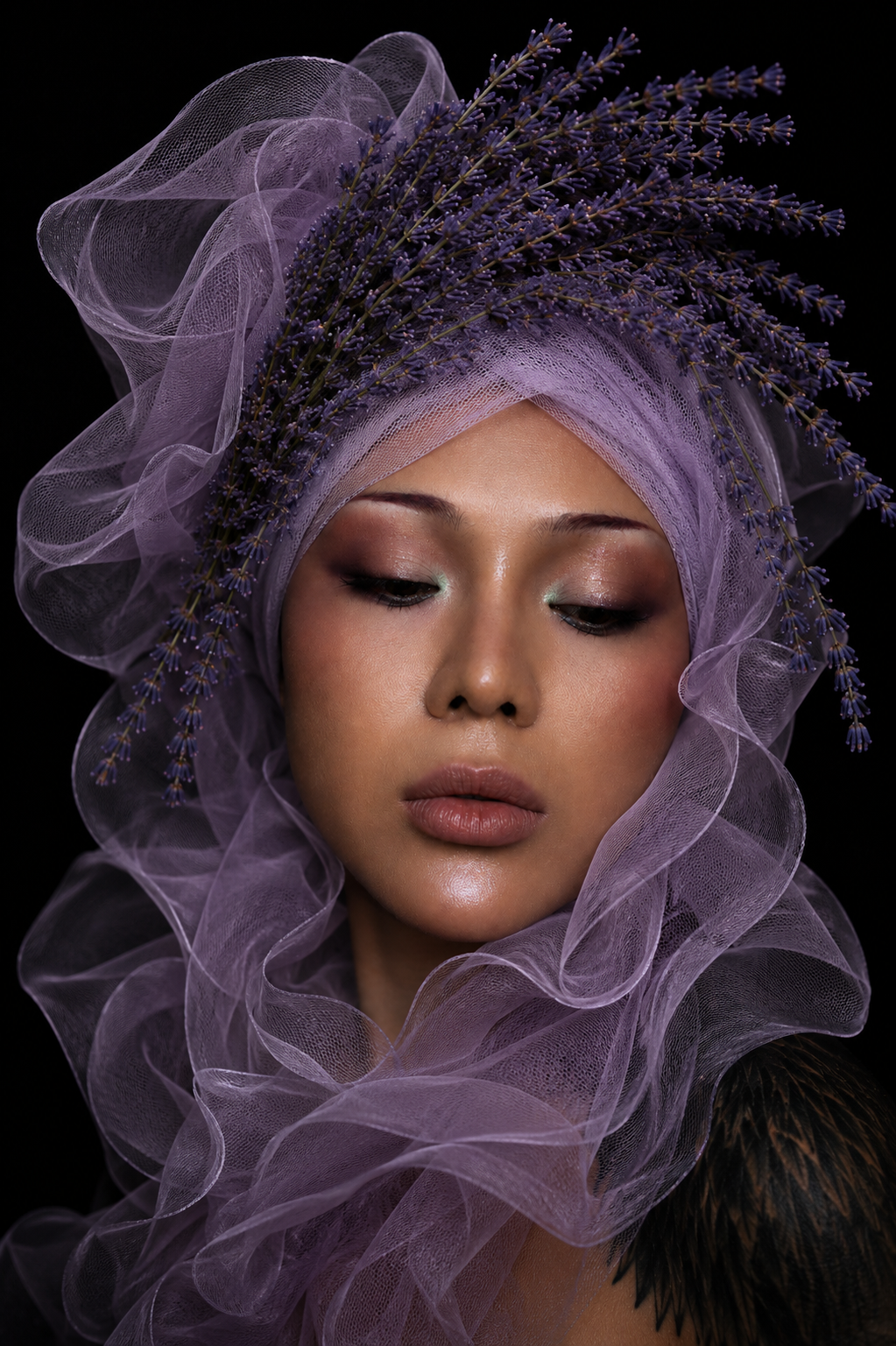
CONTRAST CREATES ATTENTION
The human eye notices difference.
Light against dark.
Warm against cool.
Matte against gloss.
Smooth against textured.
Sharp against blurred.
Saturated colour against muted skin.
Large shape against small detail.
This gives us another formula:
CONTRAST = VISUAL ENERGY
More contrast generally creates more visual intensity.
Less contrast creates greater visual harmony.
Neither is inherently better.
The question is:
How much energy does the concept require?
For soft beauty, contrast may remain controlled.
For dramatic editorial work, contrast may become the central language of the image.
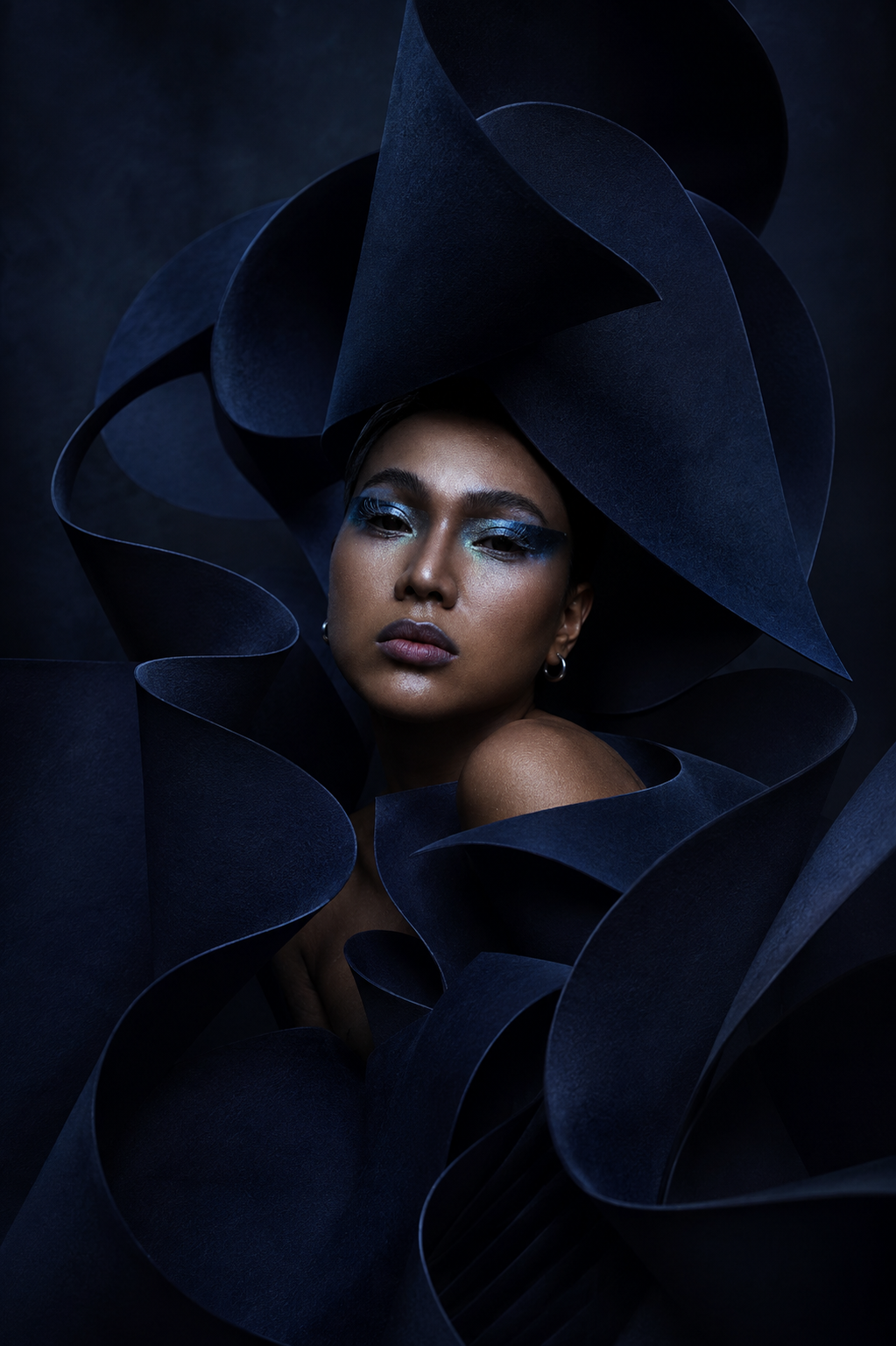
BALANCE DOES NOT MEAN SYMMETRY
Makeup does not need to be symmetrical to feel balanced.
There are two broad forms of balance.
SYMMETRICAL BALANCE
Visual weight is distributed similarly on both sides.
It often feels stable, polished and harmonious.
ASYMMETRICAL BALANCE
Different elements counterbalance one another.
One strong eye may be balanced by negative space elsewhere.
A heavy dark shape on one side may be balanced by a smaller but brighter metallic element on the other.
Think of balance as a scale.
The objects do not need to be identical.
They simply need enough visual weight to create intentional equilibrium.
Visual weight can come from:
size + darkness + saturation + texture + sharpness + position
This is particularly important in fashion and editorial makeup because asymmetry can create tension without creating chaos.
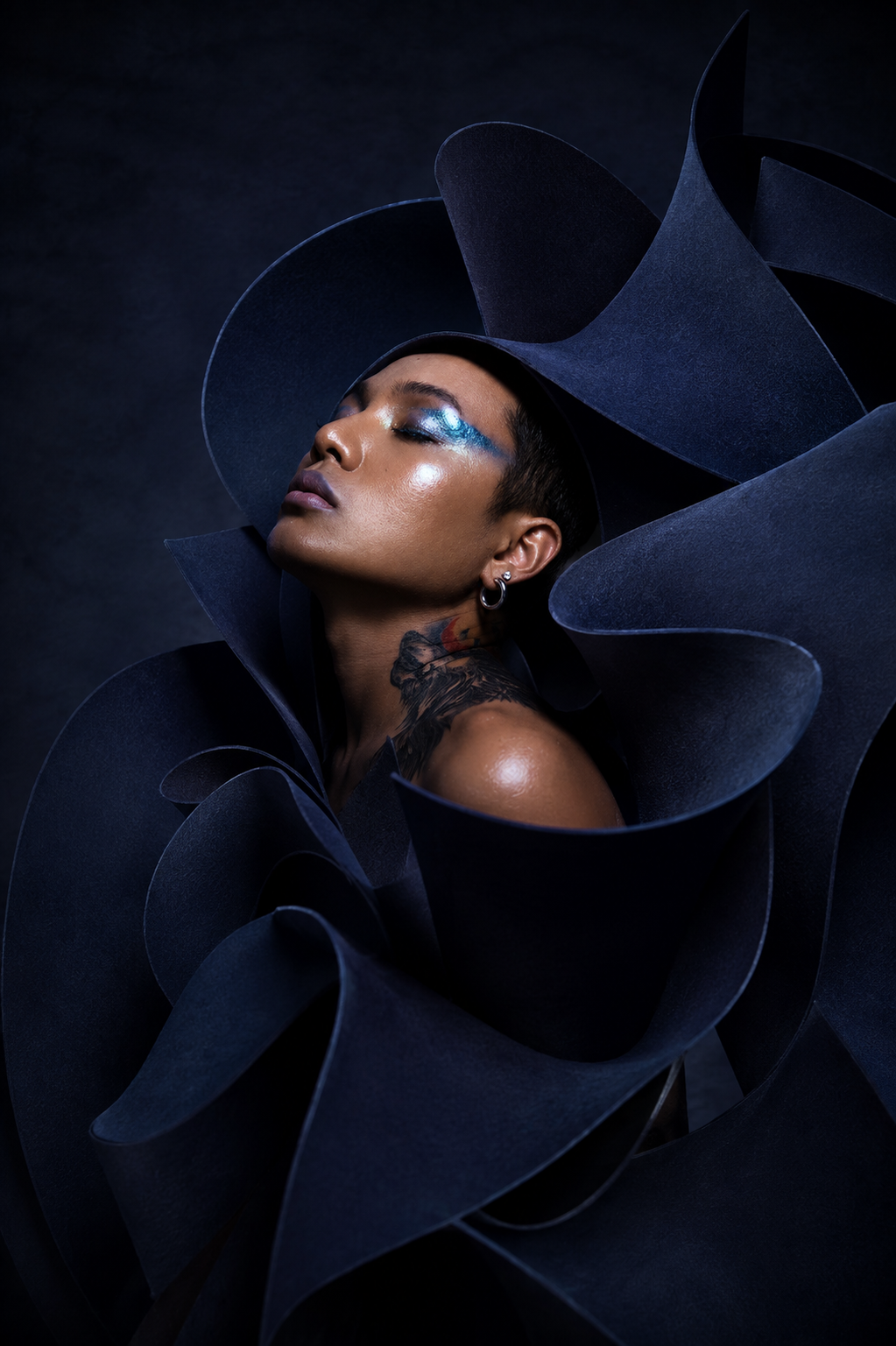
HIERARCHY: NOT EVERYTHING CAN BE THE HERO
One of the most common mistakes in makeup design is trying to make every element impressive.
Strong eye.
Strong lip.
Strong contour.
Strong highlight.
Strong brow.
Strong lashes.
Strong skin.
When everything demands attention, nothing controls the composition.
Instead, establish hierarchy.
PRIMARY
Where should the viewer look first?
SECONDARY
Where should the eye travel next?
SUPPORT
Which elements exist only to support the composition?
A useful rule is:
HERO → SUPPORT → SILENCE
“Silence” is especially important.
Some areas need to remain visually quiet so that stronger areas have room to exist.
This is the makeup equivalent of negative space.
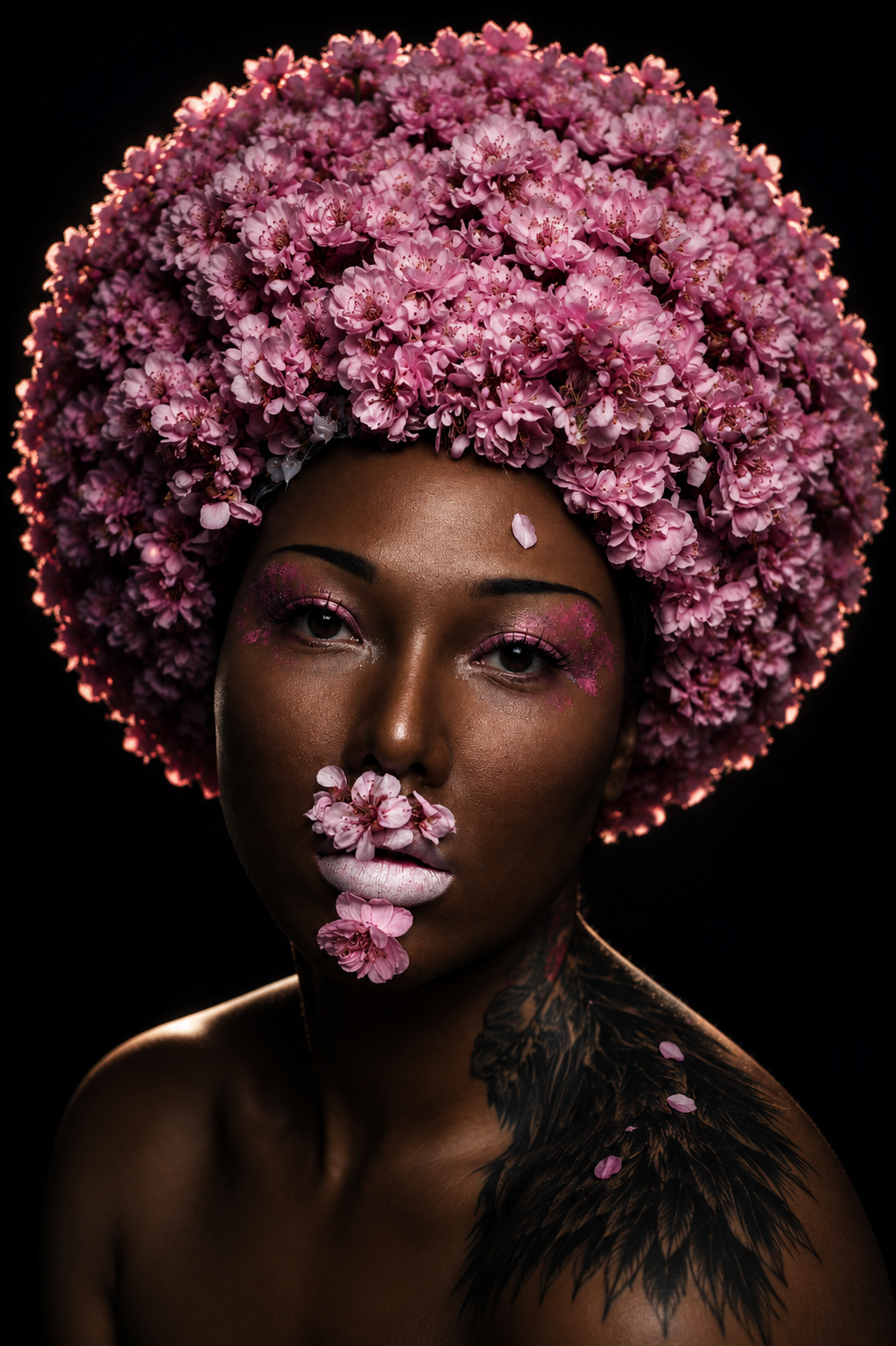
LIGHT IS PART OF THE MAKEUP
Makeup does not exist independently from lighting.
A highlight only becomes a highlight because it interacts with light.
A contour can disappear under flat frontal lighting.
Texture can become dramatically stronger under hard directional light.
Metallic pigments can change completely depending on the angle between the face, light and camera.
Therefore, when designing makeup for photography, think:
MAKEUP + LIGHT + CAMERA = FINAL IMAGE
Not:
Makeup = final image.
Ask where the key light will come from.
Ask which planes will catch it.
Ask where shadows will naturally form.
Ask whether reflective makeup will become brighter or disappear when the model turns.
For photographic makeup, the lighting design is effectively another cosmetic product.
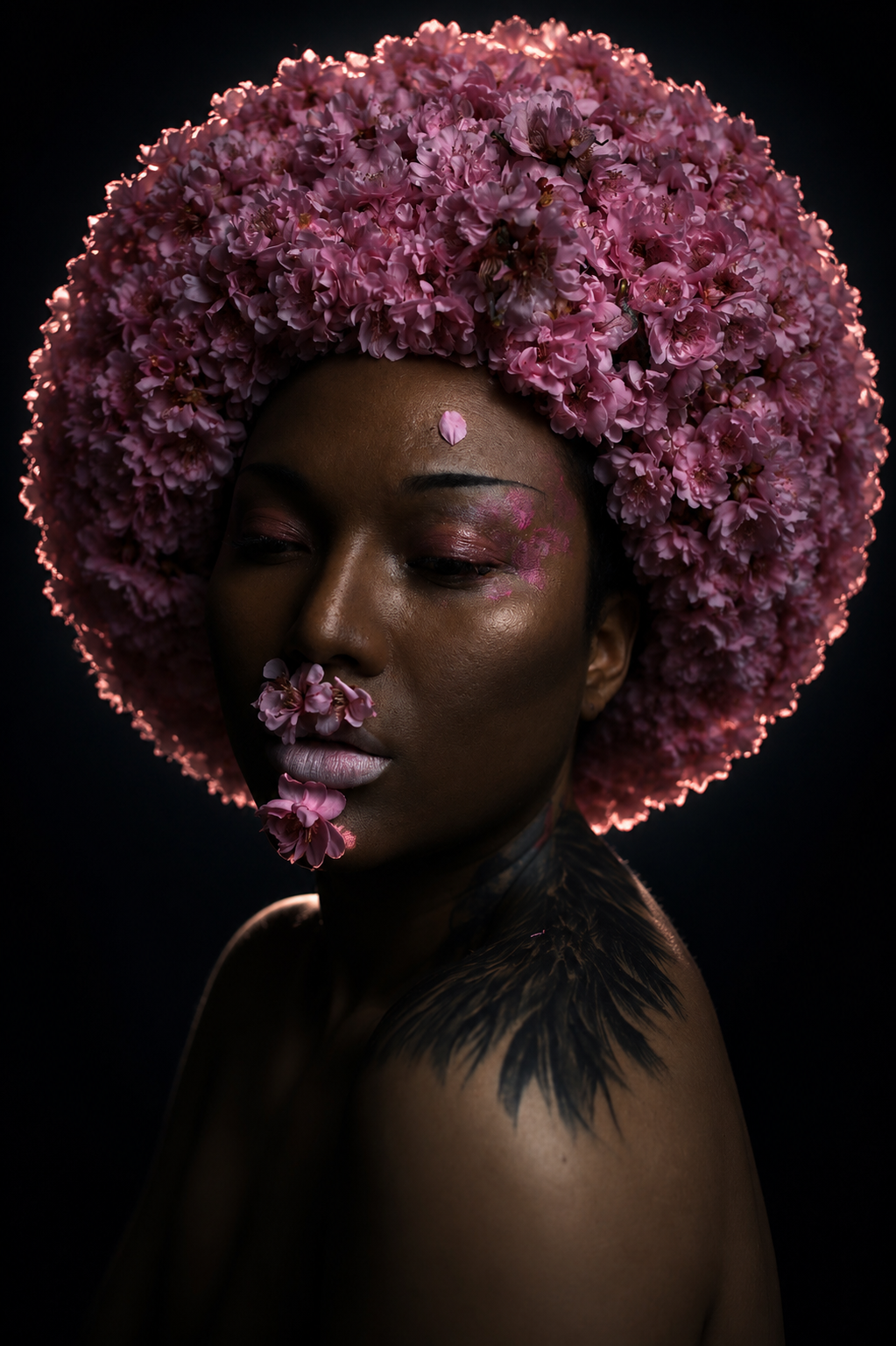
THE MAKEUP MIXOLOGY SYSTEM
All of these principles can be condensed into one workflow.
Before creating any look, work through seven questions:
1 — FACE
What structure am I working with?
2 — INTENTION
What should the makeup communicate?
3 — COLOUR
What hue, temperature and saturation support that intention?
4 — VALUE
Where are my lights, midtones and darks?
5 — FORM & PLACEMENT
What am I bringing forward, pushing backward, widening, lifting or exaggerating?
6 — TEXTURE & EDGE
What should reflect light? What should absorb it? What should be sharp? What should dissolve?
7 — HIERARCHY
What is the hero, what supports it, and where do I leave silence?
Then test everything under the actual light.
THE FORMULA
The entire system can ultimately be remembered as:
READ → INTEND → BUILD → CONTRAST → CONTROL → TEST
READ the face.
INTEND the emotional or visual result.
BUILD with colour, value and form.
CONTRAST through colour, texture, edges and light.
CONTROL placement, balance and hierarchy.
TEST the design under lighting, movement and camera.
This is the difference between simply applying makeup and designing makeup.
FROM TECHNICIAN TO MAKEUP ARTIST
Technique is essential.
You need to understand skin preparation, complexion, colour correction, blending, sanitation, product behaviour, longevity, lash application and precision.
But technique is the vocabulary.
It is not the language.
Knowing how to blend does not tell you what should be blended.
Knowing how to contour does not tell you what form you should create.
Knowing colour theory does not tell you what emotional world those colours should inhabit.
The next level begins when technical knowledge becomes visual decision-making.
Instead of asking:
What makeup look should I copy?
ask:
What am I trying to make the viewer see and feel?
Then use colour, value, form, texture, placement, edges, contrast and light to construct that experience.
That is makeup mixology.
Not a collection of rules to memorise, but a system of variables you can manipulate.
And once you understand the variables, you no longer need to memorise every possible look.
You can create your own.
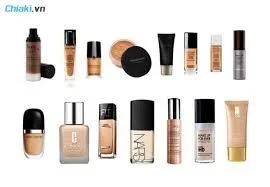
Comprehensive Guide to Foundation Bases: Classification, Skin Compatibility, Tool Artistry, and Top Product Recommendations
It All Begins Here
In professional makeup, foundation is the literal bedrock of your work. For a makeup artist, choosing a foundation goes far beyond matching shades. You must master the chemical composition of the product—its foundation base.
Choosing the correct base dictates the longevity, texture, and seamless fusion of the product with the skin. This professional guide breaks down the four main foundation bases, their interaction with different skin types, the art of choosing the right application tools, and the top-selling products available at MECCA and Sephora Australia to complete your freelance kit.
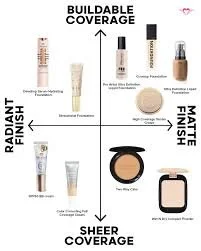
PART 1: THE FOUR PRIMARY FOUNDATION BASES
It All Begins Here
1. Water-Based Foundation
Water-based foundations feature water (Water/Aqua) as their primary ingredient, with little to no heavy silicones or oils. The texture is fluid, highly breathable, and absorbs instantly into the skin.
Core Characteristics: Delivers an ultra-lightweight, "no-makeup" skin finish. It allows the pores to breathe naturally while providing immediate hydration.
Identification: Water or Aqua sits at the very top of the ingredient deck. Silicone compounds like Dimethicone are entirely absent or relegated to the absolute bottom of the list.
2. Silicone-Based Foundation
Silicone-based foundations utilize high-grade silicone polymers. While water may still be present to liquefy the formula, ingredients ending in -cone, -siloxane, or -silicate appear within the top three slots.
Core Characteristics: Silicone acts as a smoothing agent that fills in large pores, fine lines, and texture gaps. It creates a waterproof and sweatproof barrier, locking the makeup in place for hours without oxidizing.
Identification: Look for Dimethicone, Cyclopentasiloxane, or Phenyl Trimethicone at the top of the label. The cream has a velvety slip.
3. Oil-Based & Serum-Hybrid Foundation
These traditional or modern hybrid formulas rely on mineral oils (Mineral Oil/Petrolatum) or nourishing plant lipids as their emulsifying core.
Core Characteristics: Offers rich nourishment and high to absolute full coverage. It forms an emollient shield that prevents moisture evaporation, leaves a glass-skin sheen, and prevents makeup from clinging to dry patches.
Identification: Ingredients like Squalane, Jojoba Oil, Argan Oil, or Mineral Oil appear in the top lines.
4. Mineral / Powder Foundation
Mineral foundation exists as loose or pressed dry powder made from finely milled earth minerals.
Core Characteristics: The cleanest, most non-comedogenic option available. Completely free of water, silicones, oils, and chemical parabens, it provides breathable coverage while actively soothing inflamed skin.
• • Identification: The packaging states Mineral Foundation. The ingredient list is incredibly short, featuring Zinc Oxide, Titanium Dioxide, and Mica.
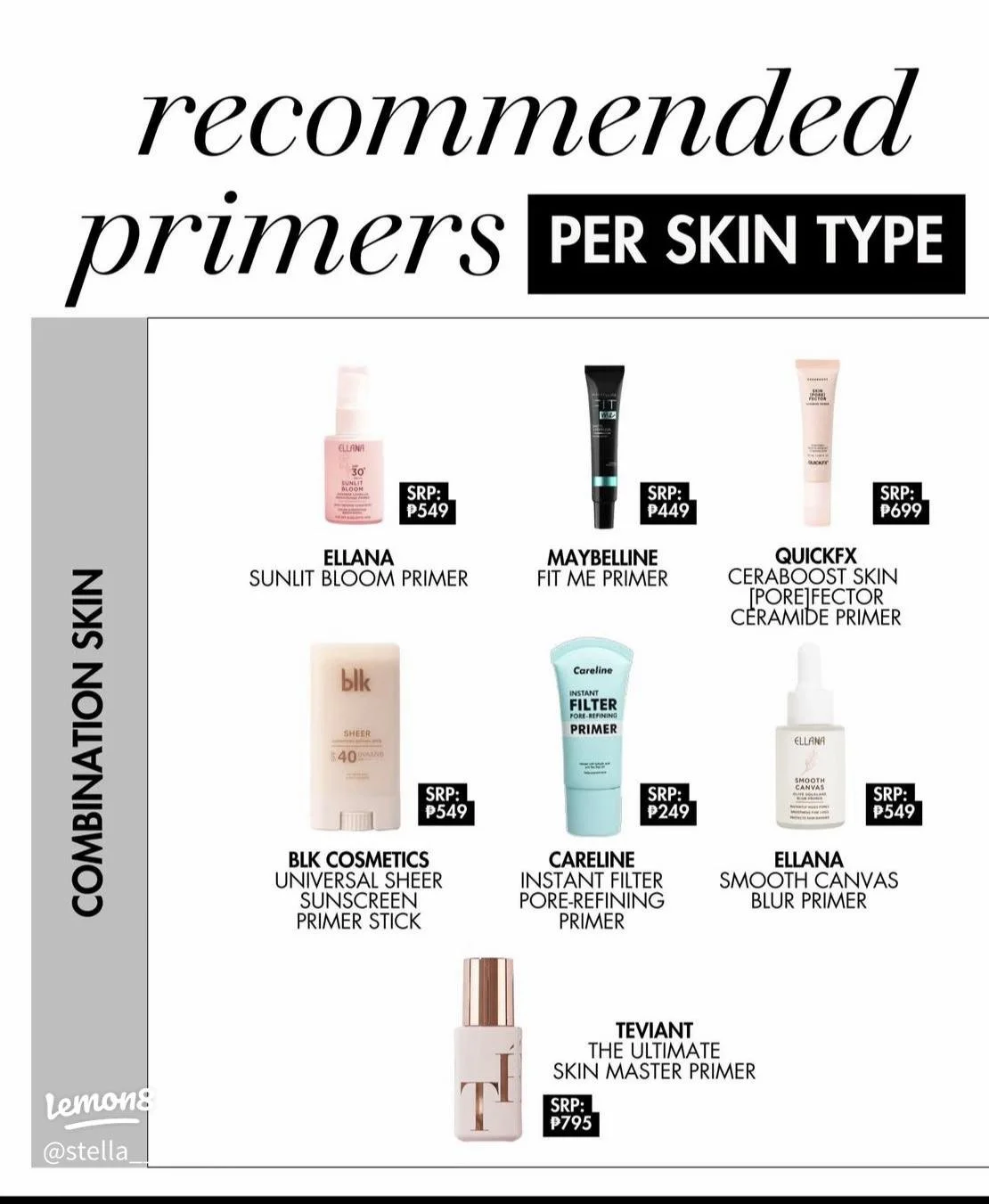
PART 2: SKIN TYPE COMPATIBILITY & BEST PRODUCT RECOMMENDATIONS
It All Begins Here
1. Oily & Extremely Oily Skin
Optimal Base: Silicone-Based.
Why it works: Excessive sebum breaks down makeup. Silicone creates a shield that stops oil from breaking through while providing a matte finish that lasts 8 to 12 hours.
Avoid: Oil-based formulas.
Top Mecca Picks:
Estée Lauder Double Wear Stay-in-Place (The gold standard for longevity in the Australian climate)
NARS Natural Matte Longwear Foundation
Top Sephora Picks:
Fenty Beauty Pro Filt’r Soft Matte (Highly sweat-resistant)
Huda Beauty Easy Blur Natural Airbrush Foundation
2. Dry & Flaky Skin
Optimal Base: Water-Based (for light wear) or Oil-Based/Serum (for full coverage).
Why it works: Dry skin lacks lipids and moisture, causing foundation to look cakey. Water bases instantly plump dry skin cells, while oil/serum bases create a glowing finish that masks dry flakes.
Avoid: Heavy matte silicone bases.
Top Mecca Picks:
Chantecaille Future Skin (An ultra-hydrating gel formula)
Westman Atelier Vital Skin Foundation Stick (Rich in squalane for flaking skin)
Top Sephora Picks:
DIOR Backstage Face & Body Foundation (Buildable, radiant water-base)
ILIA Super Serum Skin Tint SPF 40 (Packed with plant oils and squalane)
3. Combination Skin
Optimal Base: Lightweight Silicone or a Targeted Combination.
Why it works: Combination skin exhibits an oily T-zone but dry cheeks. You can apply a thin silicone-based foundation globally, or spot-apply a silicone base to the T-zone and a water base to the perimeter of the face.
Top Mecca Picks: NARS Light Reflecting Foundation / Charlotte Tilbury Airbrush Flawless
Top Sephora Picks: Make Up For Ever HD Skin / Makeup By Mario SurrealSkin
4. Acne-Prone & Highly Sensitive Skin
Optimal Base: Mineral / Powder Base.
Why it works: Inflamed or post-procedure skin reacts poorly to chemicals. Mineral bases contain zero synthetic fragrances. Zinc Oxide and Titanium Dioxide act as physical barriers that calm inflammation and protect against UV rays.
Avoid: Heavy oils and occlusive silicones.
Top Mecca Picks:
bareMinerals Original Loose Powder Foundation SPF 15
bareMinerals Matte SPF 15 Foundation
Top Sephora Picks:
Tarte Amazonian Clay Blurring Powder Foundation
Sephora Collection Care Mineral Compact Powder
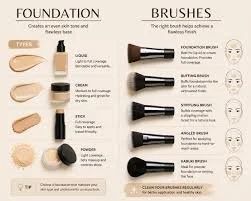
PART 3: APPLICATION TOOLS, RULES & KNOWLEDGE SUMMARY
It All Begins Here
Category 1: Water-Based Foundation
Primary Identifying Ingredients: Water, Aqua listed at the very top; little to no silicone.
Optimal Skin Types: Dry skin, normal skin, mildly sensitive skin.
Recommended Tools: Damp sponge, Synthetic flat foundation brush.
Technique: Stipple gently with a damp sponge to blend the water molecules seamlessly into the skin, or glide a synthetic flat brush along the skin grain to preserve sheer coverage. Avoid natural hair brushes.
Surface Finish: Lightweight, natural, plump (Dewy/Satin).
Category 2: Silicone-Based Foundation
Primary Identifying Ingredients: Dimethicone, Cyclopentasiloxane located at the top lines.
Optimal Skin Types: Oily skin, extremely oily skin, skin with large pores.
Recommended Tools: Dense round buffing brush, Lightly damp sponge.
Technique: Buff the product using tight, small circular motions. This presses the silicone polymers into pores and texture gaps for an airbrushed, high-coverage finish.
Surface Finish: Velvety smooth, high coverage, long-lasting (Matte).
Category 3: Oil-Based / Serum Foundation
Primary Identifying Ingredients: Mineral Oil, Petrolatum, Squalane, various plant oils.
Optimal Skin Types: Very dry skin, aging skin, flaky skin.
Recommended Tools: Clean fingertips (for body heat), Thick dense sponge.
Technique: Warm the product between your fingers first to melt the dense waxes and oils. Press onto the skin, then use a dense sponge with firm pressure to drive the lipids into the skin and lift away greasy excess.
Surface Finish: Radiant dewy sheen, full coverage (Rich Dewy).
Category 4: Mineral / Powder Foundation
Primary Identifying Ingredients: Zinc Oxide, Titanium Dioxide, Mica.
Optimal Skin Types: Inflamed acne skin, extremely sensitive skin, oily skin.
Recommended Tools: Dense round-top Kabuki brush, Dry velour puff.
Technique: Swirl a dry Kabuki brush into the powder, tap off excess, and buff firmly into the face using broad circular motions. The friction activates the minerals, turning powder into a creamy, solid veil. Never use a damp sponge.
• • Surface Finish: Matte and fresh, natural smoothing, lightweight feel.
THE GOLDEN RULES OF APPLICATION
To ensure your client's makeup does not separate or slide off during an event, follow these professional standards:
The Primer and Foundation Synchronization Rule:
Always pair like with like. If you use a silicone-based foundation, your primer must be silicone-based so they lock together. Applying a water-based foundation over a silicone primer causes the layers to repel each other, creating immediate pilling and sliding.Targeted Skin Prep:
For oily clients, prep with lightweight, oil-free gel hydrators. For dry clients, drench the skin in rich creams or face oils before applying the base. Let the skin prep absorb completely for 3 to 5 minutes before touching it with foundation.Strict Tool Hygiene:
Silicone-based products leave a stubborn film on brush bristles. Wash your buffing brushes with a deep-cleansing oil or silicone-dissolving brush cleaner after every single job. Never leave beauty sponges damp inside enclosed makeup kits, as they harbor black mold.
By mastering the science behind these four bases and stocking your kit with top-performing products from Mecca and Sephora, you can confidently customize flawless, long-lasting complexions for any client skin type.